Five Things Friday: Mini-Interview with Author Eva Pohler

This week’s “Five Things Friday” author is Eva Pohler! Eva Pohler writes everything from “mysteries, thrillers, and young adult paranormal romance based on Greek mythology,” as mentioned on Eva Pohler’s website: https://www.evapohler.com/.

Let the adventure commence!

Willow Croft: I enjoyed the video tours of your house and writing space, and I read that you are also a HGTV fan. (I, myself, spend way too much time looking at homes on the Old House Dreams and CIRCA Old Houses website.) Which HGTV “Dream Home” would you have most wanted to win, and why?

Eva Pohler: The year I was most obsessed with the HGTV Dream Home was in 2010, the year it was in Sandia Park, New Mexico. (https://www.hgtv.com/sweepstakes/hgtv-dream-home/2010/hgtv-dream-home-2010-beautiful-room-pictures-pictures) Although the views from the home are more desert than mountain, they are nevertheless breathtaking. The southwest style architecture is also pleasing, and I love the layout of the floorplan.

However, looking over them all, I think I would most like the house in Merritt Island, Florida. (https://www.floridatoday.com/story/news/2016/06/15/hgtv-dream-home-merritt-island-sells/85961888/) This has more to do with the ocean views and the southern climate than the house itself–even though the house is gorgeous. Truly, there isn’t a dream home that I don’t love, so it comes down to location. I love warm climates and water views.

Willow Croft: The food question! I read in your interview on the Trinity University website that you were a Girl Scout troop leader once upon a time. What’s your favourite Girl Scout cookie?

Eva Pohler: It’s a tie between Thin Mints and Trefoils, depending on my mood.

Willow Croft: If you were magically transformed into a deity of the Greek pantheon, who would you be (can be an actual deity, or one of your own imagination). What divine power(s) would you have?

Eva Pohler: The serious side of me would choose Themis, the goddess of justice, mainly because I care deeply about social injustices and wish I had the power to right them. I would love to eradicate all forms of discrimination so that every person felt as valued and respected as the next.

The fun side of me would choose Amphitrite, goddess of the sea and wife to Poseidon. I love the sea and can imagine the pleasure of swimming with dolphins and sunning on beaches as I watched the sun sink beyond the horizon.

Willow Croft: Do you have a favourite(s) creator of fantastical or mythological art (can be a classical or modern/contemporary artist)?

Eva Pohler: My children are my favorite artists. My older son, who is twenty-five, is a computer software developer, but he has a creative side. He has created art for a number of Dungeon and Dragons campaigns–hand-drawn art. And he also uses graphic art to create designs for his computer games. His imagination is incredible. I’ve told him many times that he could be a writer.

My other son, who is twenty-two, is a painter and musician. He paints other musicians and celebrities. I am amazed by how realistic his paintings are.

While my older son creates fantastical art and my younger more realistic art, my daughter, who is twenty, creates both. She creates art with diverse mediums, but her paintings are the most brilliant, in my opinion. Both her fantastical and her realistic paintings are beautiful.

Willow Croft: Outside of your journeys within your books and your imagination, what’s the most interesting place you’ve visited in real life?

Eva Pohler: Probably the most interesting place I have visited is the Philippines, mainly because it is the most different of any place I have been. I lived there for two years when I was a child while my father was stationed there. The climate was lovely, except during typhoon season. The views of the ocean and of the volcanoes were spectacular. I feel fortunate to have been exposed to another culture so different from mine at such a young age.

~~~~~~~

Meander through Eva Pohler’s magically mystical universe. Mysterious adventures await!

https://www.evapohler.com/

https://www.facebook.com/evapohler

https://www.instagram.com/evapohler

https://www.youtube.com/evapohler

https://www.twitter.com/evapohler

https://www.pinterest.com/evapohler

https://www.bookbub.com/authors/eva-pohler

https://www.goodreads.com/author/show/4888434.Eva_Pohler

Five Things Friday: Mini-Interview with Garon Whited


Meet Garon Whited, author and longtime D&D gamer, in this week’s “Five Things Friday”!

Willow Croft: You’ve written about vampires, dragons, ants, and…cats! If you could become any one supernatural, fantastical, cryptozoological, or non-human life form, what would you be, and why?

Garon Whited: Anything? Anything at all? We’re not even going to narrow it down a little? Oh, well, start with the softballs, sure. Ease into it. Don’t go for the tough questions right off. Pfft.

Let me think about that. [time passes] Okay, I think I’ve got it. While it’s tempting to be a Time Lord—and steal a TARDIS—or to be a dragon, or even a vampire, I think I’d have to settle on a third-stage Lensman. They were designed by the Arisians, true, but they’re about as perfect a creature as has ever been. While they may live an immensely long time, they’re not immortal—unless they choose; whether they can extend their lives indefinitely hasn’t been conclusively determined.  Immortality isn’t necessarily all it’s cracked up to be.  They have immense intelligence, profound powers, exceptional physical prowess, and basically every advantage ever found in the entire lexicon of human potential.

Unlike Arisians, however, they aren’t necessarily totally cerebral. They’re still humans, although highly advanced ones.  And, when it comes right down to it, I’m a human. Mostly. Kind of. In many ways. I should probably go with what I know rather than try to figure out all the fiddly details of another species.

DMDice

Willow Croft: Presto! You’ve just discovered you’re the next time lord . . . what bizarre food combination would your companion find you eating?

Garon Whited:

“Professor?”

“You pushed the ‘Talk’ button?”

“What is this?”

“Hey!  Don’t touch that!”

“Is it some sort of experiment?  Dalek repellent?  Cyberman poison?”

“I can drop you off in Wales, you know.”

“I like Wales.”

“…Four million B.C.”

“So, you were saying about this delicious-looking bowl of…?”

“Chocolate chips in peanut butter.”

“There’s peanut butter in that?”

“I like the chocolate. And the peanut butter adds flavor. And it makes it easier to spoon it up.”

“But…”

“If you don’t want to eat it, I will.”

“Look, if you’re going to steal a food replicator from the Federation, could you at least program it with something else? I would like to eat, too!”

“It’s programmed for everything but tea. Ask for tea.”

“What? Why?”

“It’ll work out what you want to drink through taste bud patterns and neurological signals. It will then produce a liquid which is almost, but not quite, entirely unlike tea.”

“You’re weird.”

“I find it highly improbable you’re only just now noticing.”

“I was confused by your heart of gold.”

“I knew I liked you for some reason.”


Willow Croft: Logic and science aside, if you could travel back in time, what historical event would you change, and why?

Garon Whited: Sorry; I can’t ignore the logic and science part. Too many years playing role-playing games where the players need to have a consistent framework where things can eventually make sense.

However, if I’m going to change something, there are a couple of candidates.

Was there an Atlantis? Let’s talk about it not sinking—or, at the very least, playing tourist before the end. Did aliens build the pyramids?  We’re going to need to talk about that—to the locals, and to the aliens. And so on.

But for documented historical stuff, allow me to mention the Library of Alexandria.  While I acknowledge the place—for history’s sake—has to be sacked, would it really be such a bad thing to show up a couple of years beforehand, hire a hundred scribes, and make a backup copy? Or just spend my days in the library, pretending to read everything, while wearing newfangled glass lenses over my eyes? “Newfangled” to the locals, perhaps. The concealed high-tech video recording device I’m using to make copies of everything I pretend to read has to blend in.  I’m not slapping the documents on a copier.

MathNerd

Willow Croft: Do you have a favourite pair of D&D/role-playing dice?

Garon Whited: No, I don’t. These days, I use my laptop. It keeps my character records, worldbuilding, magic items, custom spells, the works. I’m pretty good with Excel and the workbook I have is huge, holding dozens of cities, one Empire, three kingdoms, a bunch of races, and enough adventure ideas to keep a table full of players busy from now until my grandchildren are old enough to sit by the fire and mutter about how D&D was different in their day.

Sometimes I wonder if I should just publish the darn thing. Then again, there are so many useful tools out there on the internet, as it is. Up-to-date ones, I mean, covering lots of different editions. If you’re not big on editing spreadsheets, you’d have to play 3.5 to use mine. Then again, come to think of it, I updated it to 3.5 over time… it was originally for 2nd edition, because my 1st edition spreadsheet in Lotus wasn’t easy to export…

Man, have I been at this for a while.

I do have a few unusual dice, though.

How Long

Willow Croft: What’s the most frightening thing that has crawled out from the depths of your imagination?

Garon Whited: Look. [deep breath] If something crawls out of my imagination, the world is in real trouble, because I imagine a lot. So far, it’s all still in my imagination.

As for the most frightening thing in there, how about we stick with people?

Let me explain that.

Elder Gods may do awful things to the universe, inflicting madness and death on every puny life-form in much the same way as we pour gasoline on an ant mound. They do so because it’s in their nature to do so.  It’s just how they are.  Alien fungi turning everyone into zombies? Ditto. Hungry space vampires? Same. Devouring fog that weaves through the forests, puts people to sleep, and slowly leaches their blood out through their skin? All of these are creatures that do terrible things because we think they’re terrible, not because they do. We perceive them as horrible, nasty monsters. Their thought is more, “Meh.  Humans. They would think that.”

But people?

We do good and noble things. We help each other. We raise each other up. We know what is good and we unfailingly do it. If we know something is wrong or evil or just plain unnecessarily hurtful, we would never do it! …right? Right? I hear an uncomfortable silence in answer.

Or, unlike the “monsters,” do we choose to do things to each other that we know are outright evil “because we have to”? Why do we have to? Is that what we tell ourselves as a handy excuse? Or did we screw up enough that we don’t dare admit it and take the blame—so let’s eliminate the problem by eliminating people who would blame us? Or, no, let’s just lie about it. We have intelligence. We have language.  Let’s lie to each other, cheat each other, kill each other—and worse. Oh, so much worse!

Monsters—the scariest ones—aren’t the alien Things with tentacles and slime. They’re the ones that remind us of ourselves, because there is nothing more terrifying. We may fear the unknown or the unknowable, but we know what we’re capable of. What’s even worse is we only think we know… and really don’t want to find out how wrong we are.

So, the worst thing my imagination has produced? It’s sometimes plumbed deeper into the well of human nature than is technically good for it. That’s why most of what I write has a lighthearted air. I don’t like it down there.

Garon Whited’s Books and Author Page and More:

https://www.amazon.com/Garon-Whited/e/B00IX0NER0

www.garonwhited.com

https://www.facebook.com/groups/GaronWhited/

https://www.facebook.com/groups/gwspoilers/

Six Things Saturday: Mini-Interview with Miranda Lemon and Violet Plum

This week, we have Miranda Lemon and Violet Plum from over at Violet’s Vegan Comics (https://violetsvegancomics.com/)!

Willow Croft: This question’s a two-parter! What vegetable and/or vegan dish is your most favourite? And what vegetable and/or fruit makes you go “Yuk”?

Miranda Lemon: My favourite dish is vegan Yorkshire pudding with chips and beans, and the fruit that makes me go “yuk!” is avocado, because I think it is like eating margarine.

Violet Plum: Ooh, what to choose? I guess chocolate’s not a vegetable – although it does come from beans. Speaking of beans, I think one of my favourite meals is beans on toast, especially with peanut butter and yeast extract on the toast. I’ve loved it since childhood, never tired of it and it’s so easy to make. Sadly I don’t have it very often any more because bread is no longer my friend, but it is a rare treat. And the yucky vegetable which immediately springs to mind is celery. Yuck!

~~~

Willow Croft: If you could be any animal (or plant) which would you “bee”, and why?

Miranda: I would like to be a koala because I think it would be lovely to spend all my time in a tree, eating leaves and sleeping.

Violet: If I could also wish away all human activity, I would be a Canada goose because I’d love to be able to fly, and fly great distances. They are mostly herbivorous so I wouldn’t have to eat anything yucky and I could see the world from a great height. The limit of how high Canada geese can fly is not known but they have been documented at 9km above the Earth!!! Amazing! I’ve no desire to ride in an aeroplane but I would love to be able fly myself.

~~~

Willow Croft: There seems to be a movement building around the practice(s) of urban (or wild) foraging at present. What you do think about this movement from an environmental and/or personal perspective? Which is more sustainable—a “backyard” or urban garden, foraging, or a combination of both practices?

Miranda: I think foraging is a fantastic idea, I would love it if we could find all our food that way. I don’t have a back garden, so I think it would be most sustainable if people with gardens foraged in their gardens, and everyone else foraged everywhere else. But there needs to be a lot of replanting of forests so that there will be enough for everyone.

Violet: I love this idea! One of my stories, The English Family Anderson, is about a family who live on a bus and do just that. It’s wish fulfilment for me because I’ve always fantasized about being able to live like that. Being self-sufficient. If we could all live closer to nature, follow the seasons and understand where our food comes from – be responsible for growing it and gathering it ourselves – it would feed our souls. I think both things – wild foraging and home growing – would be completely sustainable. The forest garden is the most productive use of land, as well as returning natural habitats to wildlife. I think we should turn all the agricultural land into food forests for everyone to share.

~~~

Willow Croft: Imagine the world ten years from now if we as humans don’t break our consumption-driven, environmentally destructive habits. What would the world look like?

Miranda: I think it would be not very nice, so I hope humans will break their destructive habits.

Violet: Have you seen the movie Idiocracy (2006)? With Luke Wilson and Maya Rudolph. That is the world we are fast approaching.

~~~

Willow: How do you see the world changing over the next ten years in regards to conservation and environmental awareness as driven by the latest generation(s) of kids/young people?

Miranda: I believe that if we tell children the truth they will do the right things to save the environment and conserve nature. Everyone deserves to know the whole truth, and once they do, they will know that being vegan will save the world, and so they will all go vegan, and the world will be saved. Hurrah!

Violet: Education is key. If children were told the truth at school, about meat, fish, eggs and dairy being unnecessary and hazardous to health; about animal agriculture and fishing being environmentally devastating; and about animal farming being the cause of human starvation and diseases like Covid-19, then I think they would lead the charge for an end to animal farming and a new beginning for the natural world. But sadly the governments who write the national curriculum are controlled by big businesses who make vast riches from these destructive practices so lessons aren’t going to improve any time soon. Thankfully, though, the internet has enabled more enlightened people to get this information out there, and the mainstream media picks it up and runs with it sometimes. So I think there is hope that a new generation of eyes-wide-open individuals might, through the power of their consumer choices, move the world to demand ethical, zero waste, organic vegan products, and abandon those which aren’t.

~~~

Willow Croft: And, lastly, what sort of environmentally friendly art supplies do you all use?

Miranda and Violet: Most of our art materials (pencils, watercolours, pastels and ink) have been found in secondhand/charity shops so we are re-using other people’s waste. But when we do need to buy anything new we usually get it from artdiscount.co.uk who have labelled qualifying products as vegan and have done a very helpful blog post (https://artdiscount.co.uk/blogs/artdiscount/vegan-vegetarian-and-eco-art-supplies) which explains what’s good and what’s bad for the discerning artist. There’s another helpful post, here: https://vegomm.com/vegan-art-craft-supplies/. And of course we only buy recycled sketch paper.

~~~

Visit Miranda Lemon and Violet Plum at https://violetsvegancomics.com/ where they have a wonderful selection of things for kids of all ages.

Five Things Friday with Author J.D. Graves

This week’s “Five Things Friday” interview victim is J.D. Graves, author, playwright, and editor of the EconoClash Review. (Careful not to contaminate the crime scene as you leave!)

Willow Croft: As a playwright, you’ve probably heard the term “the show must go on” more times than you can count, but in a wildly improbable scenario of your darkest imaginings, what could prevent a show from actually going up?

J.D. Graves: Actors need an audience and will do anything to make sure their needs are met. I’ve seen shows go on even after the power went out and the actors took it to the parking lot when they realized they didn’t have enough flashlights. I’ve produced shows where we met only once a week over four months. It was quite a rehearsal process that I would never attempt again…until the next time it is necessary. A terrorist attack seems to be the only thing that can stop a performance as it has happened before. In my darkest imaginings I would witness it happen in person and then the Russians would pump in the toxic gas and kill everyone including those patrons who couldn’t afford good seats. I’d be in the nose bleeds with them trying to keep my eye jelly from leaking onto my good shirt. If I survived the ordeal I’d need the shirt for work the next day.

Willow Croft: What’s the most bizarre situation you’ve found yourself in, in real life?

J.D. Graves: Do you like Hibachi? I love Hibachi it’s not just a meal it’s also a show that’s well paced and fulfilling at the end. Better than most dinner theatre I’ve suffered through. It’s simple and uncomplicated which is the opposite of my love-life over a decade ago before the blessing of children forced me to be a grown-up. Once took an ex-GF, her mom and family out to a Hibachi dinner. We were celebrating the exciting news that we were going to be parents despite officially ending our relationship (guess it was only on a hiatus for the end of summer) Stuff happens. We took up eight chairs in total. There were four seats at the grill left open. Everything was going great until a pair of couples took the empty chairs. And as luck would dictate It was my other exGF (the one I had just broken up with by telling her I’d tin-roof rusted the girl I’d broken up with in July before beginning our new relationship) her two parents and her new date. Did I tell you how much I love Hibachi? That night while ex ex GF watched the chef do spatula tricks and onion volcanoes current ex GF sat across from me. She made a big production of actively ignoring me and I tried to do the same without all the razzmatazz and pointed barbs. While she lavished attention on her new dude and his thinning hair and double chins (rebounds are what they are although I’m sure he treated her nice) things just kept getting weirder as dinner cooked in front of us. It’s tough to love someone who doesn’t love you. I was reaping what I sowed that night as far as interpersonal romantic entanglements go. My date knew the chef and they kept asking about each other’s friends and divulging personal anecdotes that made the simmering grill even hotter. Maybe they were dating too before one cold night in November, I made a phone call and the world that existed changed forever. It was a fitting metaphor for my life at that time. Chef asked my date why she hadn’t been over at such and such’s place and she blurted out “well…I got pregnant.” This caused the other exGF to laugry (cry a laugh) loud as she possibly could. She sat there for a moment and took one last look at me. It was brief, of course, but in that moment I felt the sting of the jealousy-rage-heartache trifecta. She bit her lip and turned to her date and said excuse me. She made no eye contact with anyone. New Dude said okay but didn’t cease chowing down on the cubes of grilled steak and egg fried rice and didn’t watch her leave, but I did. Shoulders curled, head down, feet propelling her out of the terrible situation. My date looked at me and asked, “Do you know her?” I shook my head and ordered a double cape-cod. Drank it and ordered another. After the second drink the exGF mother excused herself to check on her daughter. Neither returned for the duration of the meal. And everyone else took their time enjoying their dinner oblivious to the awkward tension. Meanwhile. I felt like the lobster cooking in my own shell. Never been more relieved to pay a check in all my life. I‘m married to a different lady altogether now. A wonderful woman who doesn’t put up with my crap. And we love Hibachi together. I have other bizarre stories but this one has food in it.

Willow Croft: Is there any place you’ve visited that would be the perfect setting for a noir/pulp tale? (Would it be Ohio? *laugh*)

J.D. Graves: Despite being a lifelong Browns backer I’ve never been to the buckeye state. I believe the best noir locations to be those that come across as squeaky clean. (Schools, churches, etc) this would make the impending doom of a noir story more compelling because it goes against expectations.

Willow Croft: What classic pulp-fiction-inspired dish would you most want to eat?

J.D. Graves: I’d like to try a Red Harvest. Continental Op on the side. And if I could get an extra helping of Cogan’s Trade that’d be great.

Willow Croft: You’re trying to solve a heinous crime. Quick, who would you pick to be your detecting sidekick (real or fictional)? Alternatively, who would be the dastardly adversary you’d like match wits with?

J.D. Graves: I’d pick my son because his eye for detail far exceeds my own. Our adversary would be the man I used to be in my mid-twenties he was shallow and self-destructive. And maybe John Wilkes Booth. What can I say? I have a special place in my heart for theatre people who make poor decisions.

Track down J.D. Graves in one of his internet hideaways:

https://www.econoclash.com/

https://twitter.com/JDGravesWriter

https://horrortree.com/the-horror-tree-presents-an-interview-with-j-d-graves-pushing-the-boundaries-with-econoclash/

Five Things Friday: Mini-Interview with Author Jan Olandese

This week’s author interviewee is Jan Olandese of the Book ’em Jano “Ghosts, Tall Tales & Witty Haiku” fame: https://bookemjanoblog.wordpress.com/.

Willow Croft:  If you were a ghost trapped within some sort of culinary loop where you could only eat one dish over and over again for eternity, what dish would you choose, and why? 

Jan Olandese: A fascinating question! One doesn’t think of ghosts chowing down! Then again calories wouldn’t  be an issue, would they? “Hmmm.” But then again there’s Eternity. Eating one dish forever sounds like a purgatorial thing, rather akin to the Root Canal Waiting Room or the No Escape Golf Bunker. Nonetheless:  I’d go for a really great thin crust pizza with a good cannoli for dessert. Remember, they didn’t say “Leave the gun. Bring the cannoli” for no reason! 😉

Willow Croft: To break up the monotony of eating the same dish forever and ever, what would be your preferred location to haunt for said eternity? Is there a particular person you would also like to terrify with your spectral presence?

Jan Olandese: That’s easy:  Laguna Beach, CA. The shopping (or maybe from a spectral perspective shoplifting) is great, there is good coffee, the beach is brilliant and the weather is always fine. Also the populace are … diverse enough that a ghost would blend right in. 😉 I have zee-ro desire to haunt anyone. Onward and upward, you know. 😉

Willow Croft: Turnabout is fair play, so what historical/notable figure from the past would you want to invite to haunt your home?

Jan Olandese: Aaron Burr. He was many things but never boring.

Willow Croft: So, we’ve covered the pararnormal–now onto monsters! What cryptozoological creature would you most hope to encounter?

Jan Olandese: Gosh. I thought about that…Bigfoot? Nope…bad posture and worse breath. I’ll take Nessie. I would love to actually find the Loch Ness Monster and have the equipment to capture/verify/validate its existence, especially as there is supposed to be one in Lake Okanogan, which crosses the border at Washington State and British Columbia. There are probably more sightings of others but these two have lots of lore attached.

Willow Croft: Anyone who’s familiar with your hilarious “mob haikus” might also be speculating which mafia don/mob boss you were before you entered witness protection and were relocated to this day and age courtesy of time travel. So, hypothetically speaking of course *wink wink nudge nudge*, if you had actually been in the mafia, what rank/title/position would you want to hold, and what would your mafia nickname be? Alternatively, what real-life mafia figure would you want to be?

Jan Olandese: How did you know?!! Who leaked!! Erm, okay. I’d want to be the consigliere so I could give advice/listen/strategise. Unfortunately other titles tend to have short lifespans.  My nickname…that would be “Yes, Ma’am!”

Five Things Friday: Mini-Interview with Author Yawatta Hosby

Get ready for some chills and spooky ghost stories in this week’s interview with horror and suspense writer Yawatta Hosby! See you at the campfire, and remember to bring the marshmallows!

Willow Croft: West Virginia, where you live, is one of the few states I’ve not visited. I haven’t even driven through it on one of my many road trips. I’m curious about the geography of the state, though. What’s it like there, and does living in the “eastern panhandle of West Virginia” inspire the settings of your short stories and/or books?

Yawatta Hosby: I enjoy living in the eastern panhandle of West Virginia because we’re pretty close to Washington DC and other busy cities. There’s always something to do if we don’t mind taking a short road trip, like Winchester VA and Hagerstown MD. Where I live is called “A Small Baltimore.” There’s plenty of shops, some tiny museums, and a HUGE appreciation of art. I like that each town has its own personality. Like Shepherdstown is known for being a hippy, artsy fartsy town; Charles Town is known for its race track and casino; and Harpers Ferry is known by the hiker and camping community.

The eastern panhandle is more city-like than the country, but don’t get me wrong, there’s some areas you know to stay away from haha. I don’t live on a farm. I’ve never been to a coal mine, and my family has all their teeth. I hate the ugly stereotypes West Virginians often get. You won’t find any stereotypes like run down trailers, Appalachian men shooting and hunting, etc, unless you go on the back roads or far into the woods.

Living here definitely inspires the settings in my stories. I often have my characters living in a small town that’s big enough to have secrets and not have everyone in your business. I have used some parts of WV, like the south, for inspiration in One By One and Six Plus One. I’ve also used Ranson (where the rich folk live) for Twisted Obsession. However, I also like using surrounding towns around the area. I’ve used Brunswick, MD as inspiration in Perfect Little Murder, and it’d be awesome to use Burkittsville MD (where the Blair Witch woods are located). I’m not far from there at all!!!

Willow Croft: In Six Plus One (the sequel to One by One), the characters in the book are off on their own road trip to film an “alien-centric web series” deep in the woods of West Virginia. So, this X-Files fan is dying to know—have you ever seen a UFO, or encountered an extraterrestrial being?

Yawatta Hosby: Oh man, I wish!!! I’m obsessed with aliens and UFOs. I even have a tattoo of a UFO beaming up a dinosaur on my arm. As a kid and teenager, I often teased that I was an alien. Now, in my thirties, I realize there’s something called a starseed. Maybe I’m that 🙂

I’ve never encountered an alien. Believe me, I’d probably faint. Since I believe in stuff like that, I try not to even try and look for any. Sort of like I stay away from ouija boards since I know the crazy things that can come from that. I don’t want to get abducted by a UFO and I don’t want to be hunted or stalked by any aliens, but I do often research sightings, like I do for Bigfoot.

As a teenager, I wanted to visit Roswell. The next best thing–southern WV. Greenbank was a town we visited on a WVU resident assistant’s retreat. We actually stayed in those woods in cabins, so every description shared in Six Plus One came from my memory. We had visited their museum which held a giant communication device. They felt they were contacting aliens. I believe it, so it was pretty cool to be there even though I was scared out of my mind haha. Being in the woods late at night with no electricity can play tricks on you.

Willow Croft: What’s the oddest thing that’s happened to you during a road trip/travel jaunt? Alternatively, what’s the strangest thing that’s happened to you, in general?

Yawatta Hosby: My friend and I went on a mini-road trip to Sharpsburg MD for a ghost tour. It ended at night. My mind was playing tricks on me because I’ve seen ghosts before, so have some of my family members (loved ones saying goodbye before anyone even realized they had passed away). Anyway, we were driving through Shepherdstown, trying to get home a town away. Leigh slowed down when we noticed a guy walking across the street from under a tree. He didn’t glance at us, he didn’t shield his eyes from the bright headlights. He just kept walking with a briefcase in his hand wearing a plaid jacket. Everything was off. His manner of walking was very weird.

The next day at work, Leigh showed me a website of Shepherd University’s ghosts and sure enough the plaid jacket man was one of them! I got goosebumps! I’ve seen ghosts in my lifetime. My first time was a kid. I saw it in the mirror and for the longest time I was afraid to look into mirrors. At WVU, there was a young male ghost in my dorm. He had died in the 60’s. He had opened and closed the door to the balcony, making a gust of wind disorient my papers (I had been studying in the hall with my friend). In my thirties, I felt the presence of ghosts, usually when I was hanging out with Leigh. The ghosts would pick on me and my coworkers–knock things off our desks, throw objects at us, etc. Let’s just say, I hated being alone in that old building!

Willow Croft: You have shared that your stories build upon your “fascination with psychology”. In your opinion, how does food (and diet) affect one’s psychological well-being? And what kinds of foodstuffs nourish your own deliciously dark writer’s brain?

Yawatta Hosby: If you don’t eat healthy, then your mind and body won’t be healthy. I swear I could live off junk food like I never grew up as an adult. I ate like I was a kid haha. Only ate pizza, mac and cheese, pancakes with bacon, chocolate candy bars, peanut butter/jelly sandwiches, and chicken tenders with fries. No vegetables. Only sweet tea. No water. Then at the end of 2016, I got extremely sick and ended up in the hospital for three nights. I was anemic and had a rare disease called Patterson Kelly Syndrome.

Now, I can’t have caffeine or citrus. Do you know how hard it is not to have chocolate? I still sneak pizza, once in a while though. I have no choice but to eat healthier now. At least I had a good run for all those years haha. For my dark writer’s brain, I’m all about eating Doritos and garlic knots with lots and lots of water. I feel like a kid again, going to a restaurant and asking for apple or grape juice. I can’t even drink orange juice when I get sick. If I would have known this in my earlier years, I would have snuck in more vegetables and fruits.

Willow Croft: Some of your books have numbers in the title. Aside from the obvious reference to the book’s plot, do certain numbers have special significance for you? If so, what draws you to your personal interpretation of numerology?

Yawatta Hosby: My favorite number is seven. I also get excited when I see the numbers 7-2-8 together because it’s my birthday! Other than that, I’ve never really explored numerology. I can’t tell you what any numbers mean, according to your destiny or birthdate. However, for the past few months, I have been studying angel numbers interpretations. I’m on a spiritual journey and am letting angel numbers guide my path in life. It’s been fun so far. I’ve gotten to learn things about myself that I never knew existed. I’ve grown and challenged myself as well as recognized my soul mission in life. Not many people are open to learning about themselves, letting their ego take over, so to speak. I’m on the path to letting my soul take over. For the past few months, I’ve gotten rid of some old habits and hobbies that no longer interest me. I’m excited to see who the real Yawatta is 🙂

Yawetta Hosby’s blog: http://yawattahosby.wordpress.com

Yawetta Hosby’s author website: http://yawattahosbysbooks.wordpress.com

Yawetta Hosby’s LinkedIn Page: https://www.linkedin.com/in/yawatta-hosby-7931a352/

Five Things Friday: Mini-Interview with Author Brian Gene Olson

I spy with my little eye…something pink! It’s kidlit author (and speculative poet), Brian Gene Olson!

pink glasses (3) (1)

Willow Croft: In the dramatic world, there’s something called the “triple threat”—thespians who can not only act, but also sing and dance. You’ve almost achieved a “triple threat” status in the literary world in that you write AND compose music (such as the songs for kids that you’ve had accepted by Ladybug Magazine). So, what would be your third “threat” (aka talent) that you possess?

Brian Gene Olson: Oh man, I’d love to do just one thing really well! I still feel totally out of my depth with the songwriting thing, but that’s part of why it’s fun. I’m learning as I go. But I learned music theory from YouTube, so I won’t be composing my first symphony any time soon.
The speculative poetry is fun to write because I can be a lot more experimental and bizarre than I can with children’s poetry, which is more structured and regular in its rhythms. A children’s poem, at least the metered rhyming kind I write, is like a song. I think of an iambic poem as a song in duple meter, an anapestic one as a song in triple meter. A lot of my songs, actually, start out as children’s poems, but the rhythms are so bouncy I end up singing them in my head.
But another talent? I’m not sure I have one, unless the ability to annoy my family by tapping and slapping a drum beat all day long on whatever’s in front of me can be considered a talent.

Willow Croft: If you suddenly found yourself in an unexplored wilderness, what mythical creature would you like to meet?

Brian Gene Olson: It’s not a classical mythical creature, but there’s a tiny humanoid thing in fantasy author Jack Vance’s The Dying Earth called a twk-man who rides on the back of a dragonfly. He’ll give you information, so long as you have some salt to trade. I’d find out what’s in the wilderness, where to go, what sights to see, and how to avoid The Dying Earth’s flesh-eating deodands.

Willow Croft: What are you and your family’s “go-to” favourite meals/mealtime themes (i.e. Taco Tuesday)? Share up a recipe if you wish!

Brian Gene Olson: Yes! The food question!

Okay, so I was on kidney dialysis for ten years, and once during that time I ended up in the hospital because, I don’t know, my sodium was too low or something. And so I’m in the hospital for like a week, and they put me on this special restricted kidney disease diet, and, of course, all the food’s nasty–all except for this one awesome dish, this chicken veggie quesadilla with green and red peppers, onion, sliced mushrooms, jalapeños, black olives, cilantro, and just enough melted cheese to bind it all together, everything perfectly balanced, folded into a warm tortilla, with a side of salsa and sour cream. So good! Once I discovered it, I ordered it for every meal.
But then they take me off the restricted diet and put me on the normal one. And I order the quesadilla, but it’s just not the same anymore. All the veggies are gone and it’s just chicken with a thick layer of congealed cheese. I’m like, “Can you please put me back on the restricted diet?”
Anyway, once I got home I recreated the killer version for my family, called it a “Killer Quesadilla,” and everyone loves it. It’s one of those dishes you can customize to everyone’s taste, where you just cook up all the ingredients and lay it all out for everyone to assemble the way they want. You want more jalapeño, you get more jalapeño. You want more cilantro, you get more cilantro. And if it’s my wife, she gets a whole cilantro garden.

Oh, and I got a kidney transplant in 2019. I guess I should finish that part of the story!

Willow Croft: If you had a spaceship that could traverse both space and time, where would you go to first, and why?

Brian Gene Olson: I’d go to Paris on May 29, 1913 and witness the epically disastrous premiere of Stravinsky’s Rite of Spring. Then maybe I’d go check out Black Sabbath in the ‘70s.

Willow Croft: And, lastly but not…leastly?, we all know how weird cats can be, sometimes seeming that they are from some another planet. What’s the strangest (or funniest) thing your cat Pharoah has done?

Brian Gene Olson: Definitely the strangest thing he does is eat plastic bags. Grocery bags, thirty gallon lawn bags, whatever, he doesn’t care. Those and plastic needles from fake Christmas trees and wreaths. We can’t have a real tree or a fake tree because he’ll eat the needles, so instead we have to have this reusable stick-like structure that’s vaguely in the shape of a tree with lights built into it.

Fly on over to Brian Gene Olson’s website to discover more: https://briangeneolson.weebly.com/  !

Or say hi to Brian on Twitter: https://twitter.com/BGOwriter.

Five Things Friday: Mini-Interview with Author Elinor DeWire

Egmont Key Light
Egmont Key Light: https://www.visitflorida.com/en-us/things-to-do/outdoors-nature/lighthouse-egmont-key-st-petersburg-fla.html

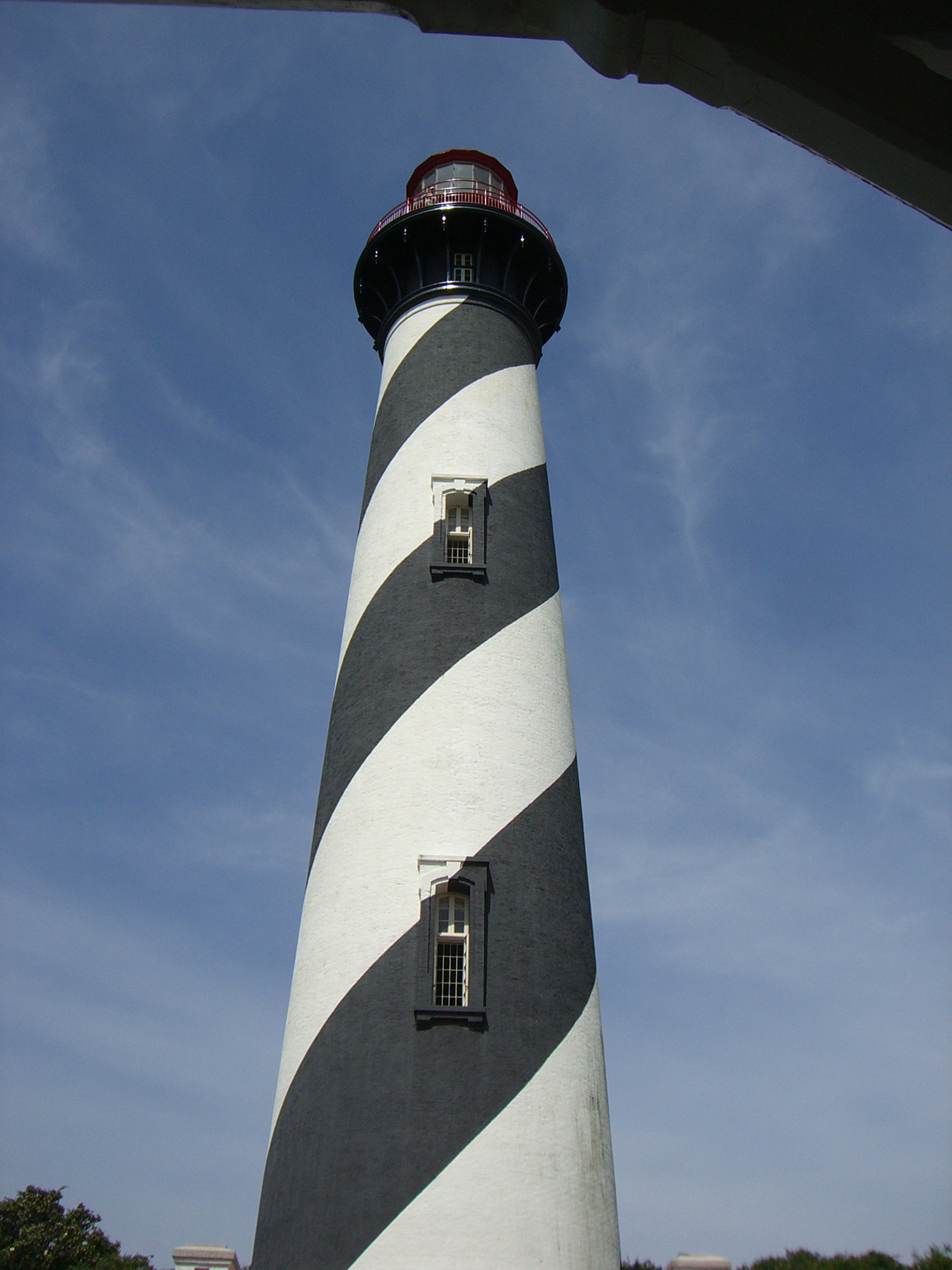
St. Augustine Light
St. Augustine Light https://www.staugustinelighthouse.org/

CIMG4589

I am absolutely thrilled about this week’s interview! I had the amazing opportunity to chat with Author (and Lighthouse Historian Extraordinaire!) Elinor DeWire!

Her book that I’ve had forever (I have the first paperback edition of Guardians of the Lights: Stories of U.S. Lighthouse Keepers for you book nerds out there!) was luckily not among the books damaged/lost in a flood. And it was the first book of my maritime history collection, and which eventually led to me getting a Master’s degree in history. While I’ve moved into other academic areas of interest (very recently!), I still love lighthouses, and have used them as settings for a couple of my (unpublished) short stories. And I love to read about lighthouses in fiction, too! (https://willowcroft.blog/2020/12/16/journeys-in-the-round/)

Willow Croft: So, we’ll get this out of the way, straight off. What’s your favourite light you’ve visited and/or lighthouse/light station you’ve stayed over at? What was the best part of your experience?

Elinor DeWire: I usually tell people my favorite lighthouse is the most recent one I’ve visited. That would be Cape Frehel in Brittany, France. Beautiful place and architecturally fascinating tower. That said, I must confess I REALLY love Nauset Beach Lighthouse on Cape Cod. (https://www.nps.gov/caco/planyourvisit/nauset-light-beach.htm) It was the first lighthouse where I did extensive research and even assisted–ever so little–the NPS with saving the Three Sisters lighthouses that preceded the red and white tower currently at Nauset Beach. I’m still hoping they will fabricate lanterns for the two capless Sisters. Nauset has a storied history and is pretty. I am a sucker for a pretty lighthouse!

Willow Croft: I always find a way to work in a mention of food, of course! Could you tell us about some common dishes and/or foodstuffs the lightkeeper and/or their family would eat while in residence?

Elinor DeWire: Keepers at remote or offshore light stations were given a standard supply of nonperishable staple foodstuff from the U.S. Lighthouse Establishment–dried beans, rice, sugar, flour, potatoes, turnips, molasses, salt, etc. I think a lot of fish was eaten, as it was handy nearby in the sea. Soups were served to stretch meat and have something hot on hand on cold days. The late Barbara Beebe gave me her mother’s rose hip jelly recipe, made from the beach roses growing at Old North Lighthouse on Block Island, RI. (https://lighthousefriends.com/light.asp?ID=40) Her family also ate blanc mange, made from seaweed. The late Connie Small gave me her apple pie recipe. There were apple trees on St. Croix Island where her husband was assigned in the 1930s. Of course, chowders were popular too, and coffee was always at the ready.

Willow Croft: As I gathered from your blog, you have a novel in the works. What has been the challenges (and benefits?) in conducting research in regards to the pandemic? Also, I understand that you’re on the board of directors for the United States Lighthouse Society. Were there any challenges with continuing work on lighthouse preservation, continued conservation of existing sites, and fundraising within the former political climate and with the pandemic shutdown and precautions? How have you tackled these challenges?

Elinor DeWire: I have written so many lighthouse books, I am growing a bit jaded with that…not that I have any less love for lighthouses; it’s just a bit of writer’s weariness and the fact that the lighthouse genre is saturated at the moment. I have three novels in print now, all set in late Regency and early Victorian England. I write under a pen name–J.J. Scott–as I feel “Elinor DeWire” should remain dedicated to lighthouses. My novels are heavy on history with a serving of romance and intrigue. My first one, Saving Lord M, was and remains quite popular, a romantic and even a bit supernatural story of William Lamb, Viscount Lord Melbourne, prime minister of England in the 1830s. I was inspired to write about him by the PBS series Victoria, which inaccurately portrayed him. The popularity of the novel surprised me, though I should have remembered that I won short fiction prizes years ago. I’m at work on a 4th novel at present, set in Cumbria, England in 1830. Fiction has recharged my researcher and scribe battery!

U.S. Lighthouse Society–I was brought onto the Board a few years ago to develop the society’s education initiative and bring kids and families into our fold. (Also, the board had been composed of all men for decades, so a woman’s touch was needed!) So far, my education efforts have been well received, and we’re bringing youth into the fold. We expect to offer a kids’ membership soon and do some events expressly for kids. The pandemic has been tough financially. Lighthouse tours are the backbone of USLHS’s income, and of course we haven’t been able to do any tours for over a year. I think the last one was in the southeast USA about 14 months ago. The society has been solvent in the last decade; we have been able to trudge through the pandemic. Tours will resume late summer 2021. The Board will have its first face-to-face meeting this late June in Florida. As for fundraising, we relied on our loyal membership to tide us through the previous administration’s lack of humanities funding (and lack of sanity, period!) and through the pandemic. We are solvent, and we are even in the process of awarding $30K in increments of $1000 to needy lighthouse groups hit hard by lack of tourism. We will slowly resume our normal ops this year.

Willow Croft: In your book, Guardians of the Lights: Stories of U.S. Lighthouse Keepers, you include stories and photos about the keepers and their animal companions, and you have also included them in your The Lightkeepers’ Menagerie: Stories of Animals at Lighthouses. What’s the most memorable companion story you remember from your research? Also, please tell us about your own animal menagerie!

Elinor DeWire: I grew up on a small farm in Maryland; thus, I LOVE animals. My two kids had every kind of pet imaginable as they grew up, though my one requirement was “legs.” No pets without legs! (I am not fond of snakes.) I wrote Lightkeepers’ Menagerie because I had SO MANY little anecdotes about animals in my research files. They seemed so important in lighthouse history. I suppose I am biased toward the stories of cats at lighthouses, as I love kitties and have had many in my lifetime, Currently, I have a tabby and a Maine Coon. In the book, there is a story about Jiggs the cat, who was born at Pigeon Point, moved with the Henderson family to Point Sur, and then died there. He was exhumed when the family moved to Point Pinos and reburied there. I included a picture of his little grave in Lightkeepers’ Menagerie. I think this is my favorite animal story because Jiggs reminds me so much of one of our cats, ignobly named Warhead by my husband, a retired Navy ordnance officer. The mention of Jiggs climbing a woman’s legs under the dinner table is priceless. Warhead did the same thing to an insurance salesman who weaseled his way into our house many years ago. Warhead somehow realized we didn’t care for this man and had no intention of buying insurance, so he did his best to make the man leave. Success!

Willow Croft: I’ve visited a few lighthouses in Florida and up into in Georgia, but I haven’t experienced anything paranormal or supernatural at the ones that I’ve visited. Not even during the St. Augustine nighttime tour that included a visit to the grounds of the St. Augustine Light. (I say I haven’t, even though I did see big, glowing blue “orbs” bouncing around the base of an old oak tree, because it doesn’t really feel like it counts.) Have you witnessed anything paranormal at any of the lights, lighthouses, or light stations you’ve visited? If you haven’t, do you have a favourite ghostly tale to share about a lighthouse you’ve researched?

Elinor DeWire: No ghosts have allowed me to meet them at lighthouses. I am not particularly receptive, though I think the ghost tales and supernatural stuff is fun to write about, and it definitely has an audience. I did several lighthouse ghost tv shows years ago. I wish there was more interest in the real history of lighthouses, but people DO like the scary stuff! Knowing all that I know about lighthouses, I can usually explain away ghosts and supernatural events at lighthouses. A couple of years ago I visited St. Simons Lighthouse in Georgia, famous for its stairway ghost and a dog named Jinx that responded negatively to the poltergeist. (https://www.coastalgeorgiahistory.org/visit/st-simons-lighthouse/) I climbed the stairs alone after hours and heard the clanking and creaking sounds attributed to the ghost. It was just the iron stairway cooling down from a hot summer day. Metal expands in heat and contracts when cool. Bang, screech, groan!!! My favorite lighthouse ghost is a little gray kitty that haunts the upstairs of the keepers’ house at Fairport Lighthouse in Ohio. (http://www.fairportharborlighthouse.org/)  It’s a long story. You’ll find it in Lightkeepers’ Menagerie. I interviewed the woman who lived in the upstairs apartment in the 1980s, a curator at the museum. She was truly convinced the feline ghost was real, especially after repairmen came to the quarters and found the mummified body of a small cat in a wall. Ooooooh! Who am I to say…

ElinorDeWire

Elinor DeWire Links

Find her on Facebook as “Elinor DeWire, Author” and here: https://www.facebook.com/J.J.Scottnovelist/
Find @ElinorDeWire on Twitter
Visit her Author Blog on Blogspot: http://elinordewire.blogspot.com/
Find her Author Website here: https://www.elinordewire.com/
View her lighthouse videos on YouTube: https://www.youtube.com/channel/UCoDc9cP-B8oKTF05jg9t3Iw
Visit her “Lighthouse” Pinterest Boards: https://www.pinterest.com/fineshine/
Find her on Amazon here https://www.amazon.com/Elinor-DeWire/e/B000APJJ0M and here https://www.amazon.com/J-J-Scott/e/B07QQ36XBT
View her education page at U.S. Lighthouse Society (full of resources for teachers and kids): https://uslhs.org/education/educational-materials

“Five Things Friday” Interview with Author Jnana Hodson!

It’s another “Five Things Friday” interview! This time I sat down to chat (well, if “chatting” involved exchanging emails) with author, journalist, and poet (and Quaker!) Jnana Hodson.

Willow Croft: Based on your blog(s) and author profile(s), you have both past and present ties to the “hippie” counter-culture, and the Quaker religion. How would you determine the place and/or the need for a like counter-culture and/or spirituality in today’s world? What societal trends would you identify that point to a need for such social, metaphysical, and character-based “sea change” in light of the recent/current events?

Jnana Hodson: Freeing ourselves mentally from advertising-driven consumerism would be a huge start. Just how much is enough for you to be happy and healthy? Or secure? Sometimes less really is more. Our unease is really a disease that sits atop fear.

The environmental crisis, especially, has been compounded by widespread denial. For one thing, it’s technically “climatic instability” rather than “global warming,” something the Texas deep-freeze demonstrates while exposing the real costs of high-level greed and hypocrisy. Closer to home, many of those monster pickup trucks we see are macho insecurity, no? A Prius or Tesla or bicycle becomes a defiant corrective act, as does an electric lawnmower rather than a conventional gas-powered cutter. Small steps can add up.

As my friend Steve Curwood contends, environmental actions are ethical, much more than economic. They can be lifestyle, too, as in choosing to live in a pedestrian-friendly neighborhood or raise an organic garden.

Racism, another big issue, has its roots in a desire to get ahead – quite simply, ahead of everyone else. You see it in the compulsion to move in a better neighborhood– one with better schools. Or on to a better job, better clothes, a better car, whatever. And for many of us, racism includes an unacknowledged assumption of Northern European superiority. It’s even embodied in the myth of the self-made man, to the exclusion of all who contributed to his rise. Or should we call it his attempted escape? Racism undermines the shared commonwealth – meaningful community – we need.

Fear also underpins the growing and costly militarization of America. It’s accompanied by soaring gun ownership, which becomes a matter of faith for many who have no intention of hunting, along with rising domestic violence.

You mention my Quaker practice, which I came to as a young adult, not knowing it had been the faith of my Hodson ancestors from the beginning of the movement in 1600s’ Britain. The Society of Friends, as it’s more formally known, avoids dogma and creed and instead emphasizes personal experience of what we sometimes call the Inward Light of the Divine. For Friends, this applies to every facet of everyday life and is embodied in simplicity, equality, peace, non-violence, and a community of kindred spirits. Not that we don’t have our shortcomings, but it does come down to an alternative Christianity of a radical sort.

One thing that it’s taught me is that individually, we’re pretty powerless. But put us together, and it’s like those bundles of bamboo, as the illustration goes. Nothing, apparently, can break them.

Willow Croft: I always try to include a food-based question, so how has old food pathways (via recipes and traditional/borrowed culinary practices) influenced your own eating habits? Do you uphold specific culinary traditions or has it evolved based on your current geographical location (e.g. your moves from the yoga ashram to the Pacific Northwest to coastal New England)?

Jnana Hodson: Oh, what a delicious question! I’ll warn you, though, I’m married to one of the world’s great cooks and she’s greatly expanded my awareness.

[There’s been quite a] revolution that’s occurred in American taste. When I turned vegetarian back in 1970, broccoli was exotic, and nobody could understand the concept of giving up meat. When I was growing up in the ’50s, most of my food came out of cans – even spaghetti! Chinese? It was chop-suey. I even remember my first pizza. As my dad would say, it was EYE-talian. I was maybe six or seven, and the aroma of oregano was exotic – I still recall that, all these years after raising our own herbs.

So vegetarianism opened me to new flavors, especially once I moved to the yoga ashram and lentils and dried beans were added to the mix. There I soon developed a knack for making bread each week. One Monday, I produced about 120 loaves, with a lot of kneading provided by my fellow yogis. Oh, yes, we were lacto-vegetarian and raised our own eggs. There’s a vast difference between those and what you find in the supermarket.

Region has definitely impacted my eating habits. Living in the Pacific Northwest introduced me to Dungeness crab and salmon as well as wild asparagus, which grew along the irrigation canals. I glutted out every May, knowing there would be no more fresh spears for another year.

Around then I came upon the Confucian ideal of no food out of season or place, which essentially points to freshness. The secret of great cooking across traditions, by the way, is the matter of respecting the ingredients, and that’s where freshness is crucial, as is knowing the difference between butter and margarine or the oils we apply. As my wife repeats, fat carries flavor. Just make sure it’s not rancid.

Regional influences include picking our own fruit in local orchards and obtaining unpasteurized apple cider, in season, as well as local cheeses. At one point, I lived near several large Amish communities in Ohio, where Swiss cheese was produced. In New Hampshire, a small country store a town away produces its own delightful cheddars and is well worth a visit. For several summers, we subscribed to a local sustainable fisheries delivery. Each week, we’d pick up a pound of what the local fishermen were harvesting rather than the common commercial varieties. Monkfish, anyone?

Gardening has had a huge impact, from asparagus to strawberries and buttery lettuces and early peas on to the range of real tomatoes – not those things you buy at the grocery. One year, we had fourteen varieties, each one distinctive. From the beginning of August till the first hard frost, I pretty much live on mayo-and-tomato sandwiches. Forget the bacon.

Joining in our Quaker Meeting’s once-a-month participation in Dover’s soup kitchen has also been eye-opening. Nobody serves soup these days, and for our turn, we do a chicken, mashed potatoes, and coleslaw dinner, which seems to be very popular. Cooking for sixty or seventy is quite different than a home dinner, but we try. We’ll be happy when we’re back to table service rather than the Covid-induced takeout.

With the kids now gone, my wife and I are downsizing and moving on to a place where scallops and blueberries are major harvests. She’s already planning the garden, as well as autumn trips northward to Aroostook County for fresh potatoes, with skins that simply melt away in your mouth.

Willow Croft: As a former journalist, how do you feel about the state of journalism today, what with the digital news trends, the howls of “fake news” heard ‘round the world, and the role social media plays in the process of journalistic integrity (or lack thereof)?

Jnana Hodson: Former? Please make that “retired.” I might not be on the payroll these days, but it’s still in my blood – and my dreams, too, usually with frustrations of trying to make deadline or fit everything on a page or adjust to a new computer system. Besides, much of my blogging can be seen as small-scale journalism.

Widespread anonymity and the lack of face-to-face accountability in social media have so far eluded the legal redress of libel and slander laws. Often, avoiding basic civility, too. Reputations can be destroyed overnight, without penalties to the perpetrators. That has to change, and likely will with some big court cases.

On the other hand, the video on smartphones has lifted the cover on police brutality and other injustices. So we do have a mixed bag.

Journalism has been in a tailspin for some time, even before the Internet whammy. We’ve had a declining level of literacy – folks simply reading – on one side. In the newsroom we used to grumble about the “bean counters” who kept expecting more output at lower cost from fewer resources. One thing for certain – the watchdog function has been seriously wounded – with consequences that will prove costly to the public at all levels. Good reporting is hard work, and sharp editing is essential. It’s a fulltime job, not an amateur role, and often needs some strong backup when those in power seek retribution. 

For the right entrepreneur, there’s potential to create a revolutionary digital news vehicle, if enough subscribers can be convinced to pay what they now do for printed paper. It could be a hybrid of written and spoken, with no reliance on advertising. I have some thoughts, by the way, on how it might differ from the generic newspaper we too often encounter today. It could certainly give rise to some fresh ways of covering a community.

Willow Croft: As a poet myself, I am always intrigued about the sources of inspiration other poets draw upon to create their poetic works. With your own poetry, is the past and personal memories more of an influence, or is your current life experience(s) more of a muse?

Jnana Hodson: Very much the now, even when that has me looking back. It’s been a discipline for exploring what’s before me, often from quirky or playful perspectives, before I let go and move on.

The clearing of my mind through meditation has been a strong factor, allowing intuition to bubble up. Sometimes I’ll scribble a short note to myself during the silence of Quaker worship, something I’ll develop and explore later. Similar things happen while showering, walking, or even driving.

Much of my work was done as a reaction to the constraints of daily journalism – often on the fly, like graffiti I revised and distilled later.

Sometimes they stayed short, like a headline. Maybe I wasn’t getting as far away from the newspaper as I thought. Other times, though, they were thrown into a blender – there’s good reason I’ve been called a Mixmaster Supreme. 

What evolves is often something like a dream, which has one foot in the past and the other in the present, not that they’re always obvious.

Willow Croft: Some of your blog topics touch on economics. What sort of economic model, or revolution, is needed to help transform the dual worlds of employment and community (social structure)?

Jnana Hodson: The poets Donald Hall, Gary Snyder, and Wendell Berry are important influences here.

Hall sees work as an embodiment of passion or a meaningful engagement, even when it doesn’t reward you monetarily. Writing a poem is work, as we know. In contrast, a job is something you do to pay the bills, and chores are unpaid things you have to do as a matter of life.

Gary Snyder has what he calls the Real Work. He also titled an early collection Earth House Hold, noting the Greek meaning of “economy.” Shall we start with its environmental awareness?

And Berry looks closely at family life as well as agriculture and community.

As Hall says, we’re really blessed when our work and our jobs come together as one. Unfortunately, what I’m seeing is a widespread denigration of the work aspect of our daily employment, and many of the higher paid positions are way out of line with their greater value to society.

Public policy has put labor and its compensation under attack for the past fifty years. All of the productivity gains have gone into the pocket of the top five percent of the population – much of that going to the one percent. People who still have jobs have been working longer and harder for less than before. And the reality is that most of those touted “entry-level positions” are dead-end jobs with no upward mobility. I’m really miffed when the employers demand “reliable transportation” while offering minimum wage. It’s an unhealthy situation, leaving many people desperate. Wonder why Megabucks are so popular? Or illicit drugs?

Raising the minimum wage is a good step but hardly enough. Quite simply, drastic corrective income redistribution is necessary. Not that we’ve really been able to talk about that. Wages in general can’t go up as long as we’re competing with Third World labor – and that extends to those call centers overseas. Yet just think of the inhibiting, negative emotional whammy the label “socialist” invokes.

Meanwhile, high-tech is eliminating many employment fields – think of travel agents, local stockbrokers, professional photography and developers, or print shops, all already gone, along with the local video stores. I’m wondering how long most local retailers can hold out once we’re free of Covid.

When I look at young graduates entering the job market, I’m grateful I’ve made it to retirement. I have no idea what I’d do in their place or how they’re ever going to afford a place of their own.

Surprisingly, some right-wing economists are reluctantly coming around to admitting the necessity of a guaranteed minimum income for everyone. I would see that as including universal health care – as others have noted, pegging medical insurance to one’s employer greatly discourages entrepreneurs from stepping out on their own unless their spouse has independent coverage – and that becomes a damper on economic growth. The redistribution should also include higher education. Graduates today are saddled with impossible debt for skills their potential employers expect scot-free. And that’s before we get to non-competitor clauses.

I’m still believe in E.F. Schumacher’s “small is beautiful,” which was actually happening until cargo-container shipping from China, abetted by “free trade” deals in Washington, wracked the American economy. Bernie Sanders, drawing on labor union economists, nailed that one.

Respecting all honest work is important. Covid showed us how essential trash collectors and nursing home staff are in the big picture. As a cub reporter, I learned that secretaries and janitors often know far more about an operation than the suit in the corner office does. That hasn’t changed. I’ve long come to see a good carpenter or plumber as an artist. ‘Nuff said?

One big shift I’ll encourage turns away from accumulating more possessions – most of us have too much stuff anyway – and toward services and activities instead. That is, quality of life over quantity. Individually donating to local causes and volunteering run along those lines. In short, we can use our time and our money to enhance the place we and our neighbors inhabit.

I’m anticipating that when the Covid restrictions are lifted, we’ll burst out into renewed social connections. It feels like ages since I’ve been to a poetry reading, a contra dance, or a pub sing. How ’bout you?

If you’re keen to hear more from Jnana Hodgson, please follow his Jnana’s Red Barn blog at https://jnanahodson.net/ or check out his book(s) on Amazon (https://www.amazon.com/Jnana-Hodson/e/B088BWJ35Y) or on Goodreads (https://www.goodreads.com/author/show/6916110.Jnana_Hodson).

Six Things Saturday: Mini-Interview with Author/Musician Ben Fitts

I switched things up a bit this week! Enjoy the awesome “Six Things Saturday” interview with author and musician Ben Fitts!

Willow Croft: Bizarro as a literary genre is still somewhat new to me (but I’m working on remedying that!). What appeal does the Bizarro genre hold for you as a writer, and, if you were looking back on it years from now, would you classify it as a literary/artistic movement, a subculture movement, or both?

Ben Fitts: Bizarro first appealed to me as a reader because I’ve always loved offbeat art and entertainment, especially when it came to comedy, so bizarro essentially felt like a more extreme version of something that I already knew I liked. It was kind of the same way I felt when I first heard Black Flag as a teenager after years of already listening to the Ramones. But the thing about bizarro that really appeals to me as a writer is the sense of absolute freedom I have when writing. Not only do I feel no pressure to make sure that everything feels believable as I do when writing more realistic fiction, but I’m free to revel and find humor in intentional lapses of logic, paradoxes, and general unbelievability. When all of that is on the table, then I’m really free to make just about anything I want happen in the story. Regarding the last part of that question, I’d call it a literary movement more than a bonafide subculture, because it’s not really linked to other artistic practices or self-identity the way full-fledged subcultures are. You can read punk authors like Kathy Acker and John Cooper Clarke, listen to punk bands, dress in punk fashion, call yourself a punk and more, but you can only really do one of those things with bizarro, at least as of now.

Willow Croft: How would you see the punk rock movement and DIY mentality persisting into the year 2021 and in the current/next generations?

Ben Fitts:  I think music and art in general is starting to become more genre-fluid, and punk is no exception. With the internet and streaming services, it’s way easier to come across new music nowadays, especially the more underground stuff. Because of this, young musicians are coming across and are influenced by a far wider range of different musical styles than many musicians from past generations have. A lot of those really niche genre labels you hear floating around nowadays, like blackgaze or hypnagogic pop, come from people having to come up with ways to market their music after the fact. So I do see punk rock musical and cultural influences persisting in DIY music scenes, but I also see it continuing to blend further with outside influences and with more and more microgenre labels popping up, and there’s nothing wrong with that. 

Willow Croft: What’s the most “Bizarro” i.e. surreal, humorous, and strange situation you have found yourself in, in real life?

Ben Fitts: I went to a rural college where we had lots of parties deep in the woods. These woods parties were a ton of fun, but it was often difficult to find your way out of the woods late at night, and I often got lost when I decided it was time to head home. When leaving these parties, I on two separate occasions accidentally stumbled upon a bonfire around which a bunch of furries were having an orgy while fully in their animal costumes. I’m guessing these furries were probably students who did this sort of thing in secret, but since everyone had their masks on, I guess I’ll never know for sure. 

Willow Croft: How do your music projects (your bands Capra Coven and War Honey) tie into your writing ventures? Are they complementary of each other, or separate?

Ben Fitts: They are pretty compartmentalized for me. Music is what I went to school for and how I pay my bills as an adult, while my writing started out as a casual hobby that ended growing more serious than I would have anticipated at first. So my musical endeavors end up taking up more of my energy and add to my stress levels, while my writing is more like a playground for me to have fun and be creative without really worrying about marketability too much. 

Willow Croft: One of the little bits of me that I still feel is a little bit “alternative” is that I despise the standardization of the educational system, which strips kids of any sort of individuality in some insane quest to be perfect—perfectly conformist—and deprives them of any opportunity to explore all the selves they might want to be. Personally, I see you as a great role model for kids in regards to living a creative, exploratory life, so what would you say to kids and young people as they begin to take over the fucked-up world we’ve left for them?

Ben Fitts: First off, thanks for saying that! I hope I’m a good role model to the kids and teenagers to whom I give guitar lessons, but it’s obviously something I worry about sometimes, as I think everyone who works with kids does. My main advice to kids is to question everything you’re told and to keep your critical thinking skills sharp. Between school, parents, belief systems, and other institutions, we have a lot of information and opinions dumped on us as we grow up. Some of it is helpful and some of it is bullshit. Part of becoming a capable and happy adult who contributes positively to the world around you is sorting out all of the bullshit you absorbed as an adolescent, and then adjusting your worldview appropriately. 

Willow Croft: To end things on a lighter note, I’ve included my usual food-based question! I noticed that your Goodreads profile mentions “you put too much hot sauce on everything”. So, please share, what’s your favourite form of liquid torture (aka hot sauce)?

Ben Fitts: I do like hot sauce! There’s a great brand from Pennsylvania called 22 Peppers that I love. 

Keen to know more? Visit Ben Fitts at his links below: